This is an edition of The Atlantic Daily, a newsletter that guides you through the biggest stories of the day, helps you discover new ideas, and recommends the best in culture. Sign up for it here.
After the administration announced the expansion of its law-enforcement surge in Minnesota early this year, calling it the “largest DHS operation ever,” Donald Trump laid out a series of stinging critiques of the state, which he said had an “incompetent governor,” a huge welfare-fraud problem, high crime, and a corrupt voting system. “What a beautiful place, but it’s being destroyed,” he said.
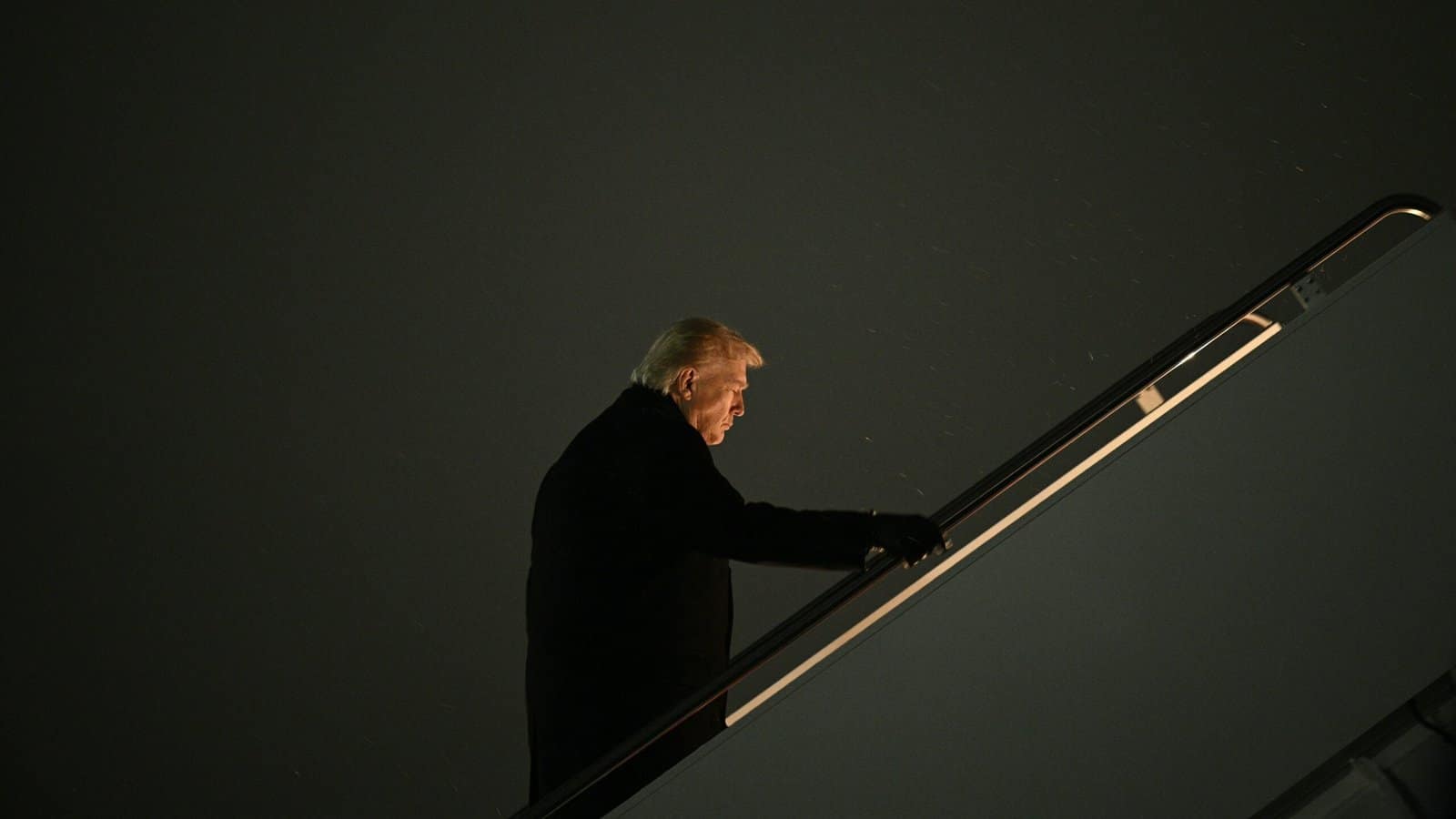
Today, the White House “border czar” Tom Homan announced the effective end to the mission, promising a “significant drawdown” over the coming week. “I have proposed, and President Trump has concurred, that this surge operation conclude,” Homan said. The announcement should be treated skeptically. When Trump ousted the Border Patrol commander Greg Bovino last month, the administration softened its tone but maintained a large and heavy-handed presence in Minneapolis. But Trump has good reasons to back down: The operation has been a political and moral disaster. Officers shot and killed two American citizens, and public opinion has turned against it.
The mission can hardly be said to have succeeded on Trump’s terms, either. Tim Walz remains governor, though he is not running for reelection. The state has refused to hand over voter rolls that the Justice Department tried to grab as a condition of a pullout. Minneapolis has seen a significant drop in crime in recent years, but the surge has arguably done more harm than good on that front: As Senator Amy Klobuchar noted last month, two of the city’s three January homicides were committed by federal agents. Meanwhile, the federal prosecutor who oversaw the welfare-fraud investigation resigned in protest of Trump-administration decisions (and is now representing a journalist whom the administration charged with dubious crimes).
Trump’s initial argument about the situation in Minnesota was that it was so dire, it required uniquely forceful action. Yet he’s now ready to pull back without achieving any of the goals he laid out. For another president, sending the agents home could be an acknowledgment of rethinking that calculus or reckoning with mistakes made. But that’s not how Trump has framed the decision. “We’re pulling out because we’ve done a great job there,” Trump told NBC News last week, going on to insult Minnesota’s governor and Minneapolis’s mayor. This fits into a pattern of his second term. The president announces a big push; it fails to achieve its goals and is roundly rejected by the people he claims it will benefit; he gives up in a huff. Trump’s mantra is You can’t fire me—I quit!
When Trump began deploying the National Guard to liberal cities such as Chicago and Portland in Democratic-led states around the country, he insisted that it was necessary to fight crime—even though crime was already dropping sharply, and National Guard troops aren’t trained in law enforcement and have limits on what they can do. (The president also said that he wanted to use cities as “training grounds for our military.”)
Because state leaders opposed the deployments, Trump had to federalize the National Guard, but the states challenged that in court. In December, the Supreme Court issued a ruling limiting the president’s ability to nationalize the National Guard in Illinois, which used the same rationale he’d employed elsewhere. A spokesperson promised that the administration would “continue working day in and day out to safeguard the American public,” but apparently Trump decided that didn’t require the National Guard after all. Rather than pursue other possible legal avenues, the White House quietly dropped the matter, pulling all federalized troops from cities.
This isn’t just about armed federal agents in the streets, though. As I wrote earlier this month, Trump insisted that he had big plans for the Kennedy Center, the capital’s premier performing-arts hall, when he embarked on an unprecedented takeover, removing much of the center’s board, pushing out its leaders, and slapping his own name on it. But now, with those efforts producing a barren schedule and empty chairs, Trump appears to just be giving up. He has announced that the Kennedy Center will close for two years starting in July, and he’s been vague about what will happen during the closure.
These examples capture the haphazard and capricious nature of Trump’s presidency. On the one hand, he has insisted in each case that the circumstances are so urgent or dangerous that they require unprecedented action and assertions of federal power. Yet once he encounters pushback, he decides that the problems are not so serious that they require sustained commitment or a real attempt to defend them. Instead, he just walks away.
Trump is no more steadfast in foreign affairs. During the run-up to the 2025 Nobel Peace Prize announcement, Trump portrayed himself as a diplomat par excellence, the man who had ended six—no, seven—no, eight wars. But his frustrations with the difficulty of actually doing diplomacy kept showing through. In spring of last year and then again in the summer, Trump engaged in perfunctory work to broker negotiations between Ukraine and Russia, but as soon as they foundered on Russian intractability, he threw up his hands and said he wouldn’t bother.
Now he seems to have abandoned his quest to be seen as a peacemaker altogether. After kidnapping Venezuelan President Nicolás Maduro last month, he began demanding control of Greenland. “Considering your Country decided not to give me the Nobel Peace Prize for having stopped 8 Wars PLUS, I no longer feel an obligation to think purely of Peace, although it will always be predominant, but can now think about what is good and proper for the United States of America,” Trump ranted to Norwegian Prime Minister Jonas Gahr Støre.
For understandable reasons, that approach was not popular with anyone: not with Denmark, of which Greenland is a part; not with Greenlanders; not with European allies; and not with the American people, who remain unconvinced of the need for annexation. So Trump did what came naturally—he gave up, accepted what was effectively already the status quo, and said that it was what he’d wanted all along.
Related:
- It wasn’t Democrats who persuaded Trump to change course.
- Trump made a bad bet on the Kennedy Center.
Here are three new stories from The Atlantic:
- Zelensky makes his pitch to Trump.
- Why the U.S. hasn’t yet struck Iran
- This is how a child dies of measles, Elizabeth Bruenig writes.
Today’s News
- Senate Democrats blocked a Republican funding bill for the Department of Homeland Security over immigration-enforcement limits, making a shutdown likely to begin on Saturday morning.
- A federal judge ruled that Defense Secretary Pete Hegseth had unconstitutionally retaliated against Senator Mark Kelly over a video urging service members to refuse illegal orders. The ruling, which followed a grand jury’s refusal to indict, blocked the Trump administration’s effort to punish the Arizona Democrat.
- Greenhouse gases will no longer be regulated by the federal government, according to an announcement by President Trump and EPA Administrator Lee Zeldin.
Dispatches
- Time-Travel Thursdays: Jake Lundberg explores a forceful 19th-century essay on the rise of the slaveholding oligarchy that asked: “Where will it end?”
Explore all of our newsletters here.
Evening Read

The Tide Goes Out on Youth Gender Medicine
By Helen Lewis
As the shaky evidence base for youth gender medicine has become better known, activists have retreated to an argument from authority. Never mind the Cass Report, whose findings resulted in the closure of Britain’s leading youth gender clinic. Never mind the study by a leading American practitioner showing that the treatments she championed did not improve minors’ mental health. Never mind reports that some adolescents were being put on a medical pathway after only a single clinic visit. For advocates, the important thing to remember was that “gender-affirming care” for minors—puberty blockers and hormones, plus surgery in rare cases—was endorsed by all of the major American medical associations.
More From The Atlantic
- Trump has a bridge he wants to sell you.
- The Epstein emails show how the powerful talk about race.
- Radio Atlantic: Iran wants him arrested. He’s going back anyway.
- Scientists figured out the problem with Johnson & Johnson’s COVID vaccine.
Culture Break
Explore. Tyler Austin Harper on the multibillion-dollar foundation that controls the humanities.
Reminisce. In a short-lived sitcom, James Van Der Beek gamely mocked his role in Dawson’s Creek—and found freedom, Megan Garber writes.
Rafaela Jinich contributed to this newsletter.
When you buy a book using a link in this newsletter, we receive a commission. Thank you for supporting The Atlantic.