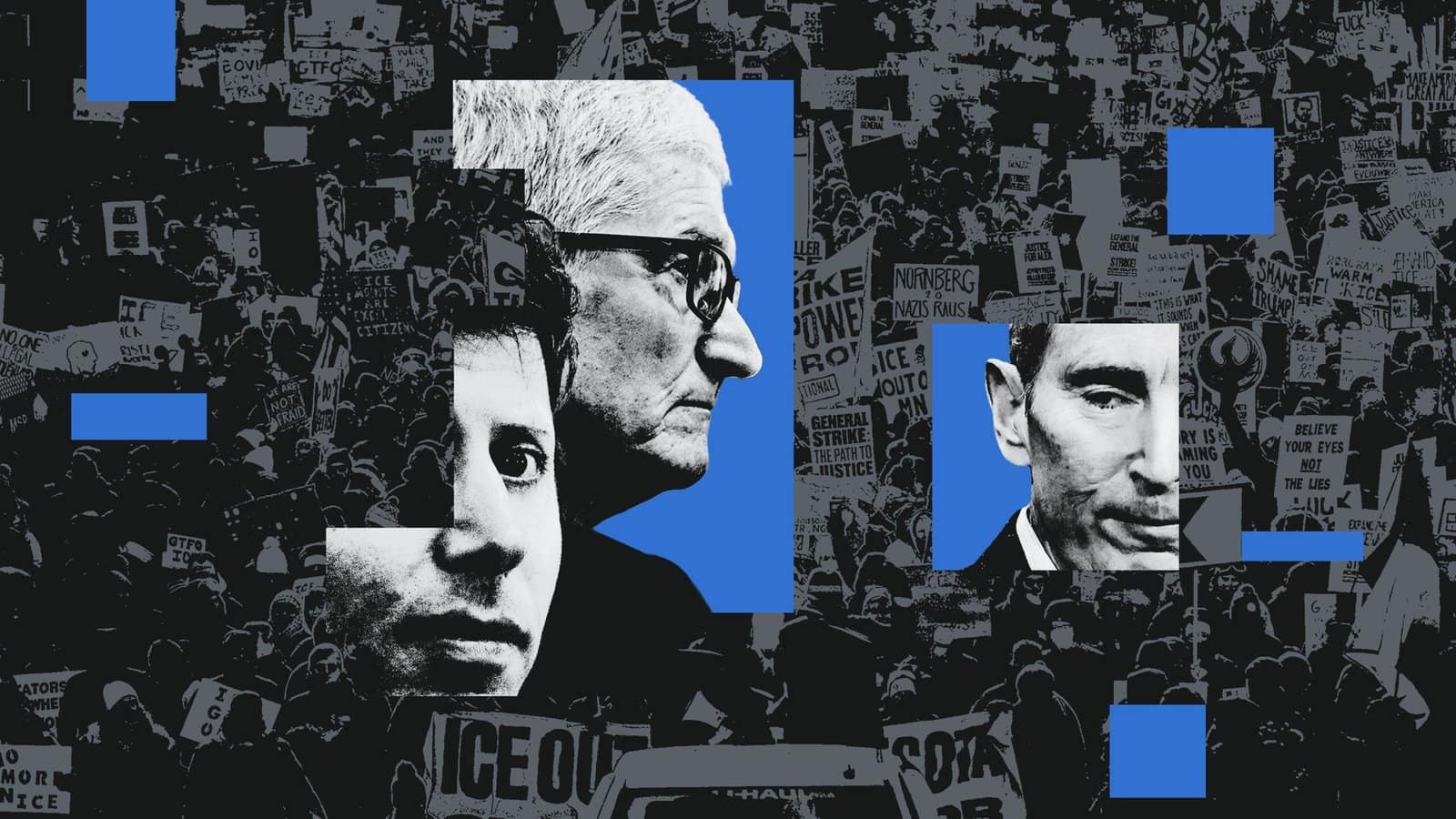
Hours after Alex Pretti was killed by federal agents in Minneapolis on Saturday, Apple CEO Tim Cook and Amazon CEO Andy Jassy showed up for a movie night at the White House. Along with other business executives and several prominent Donald Trump supporters, they attended a private screening of Melania, a new documentary about the president’s wife. The moviegoers were treated to buckets of popcorn and sugar cookies frosted with the first lady’s name.
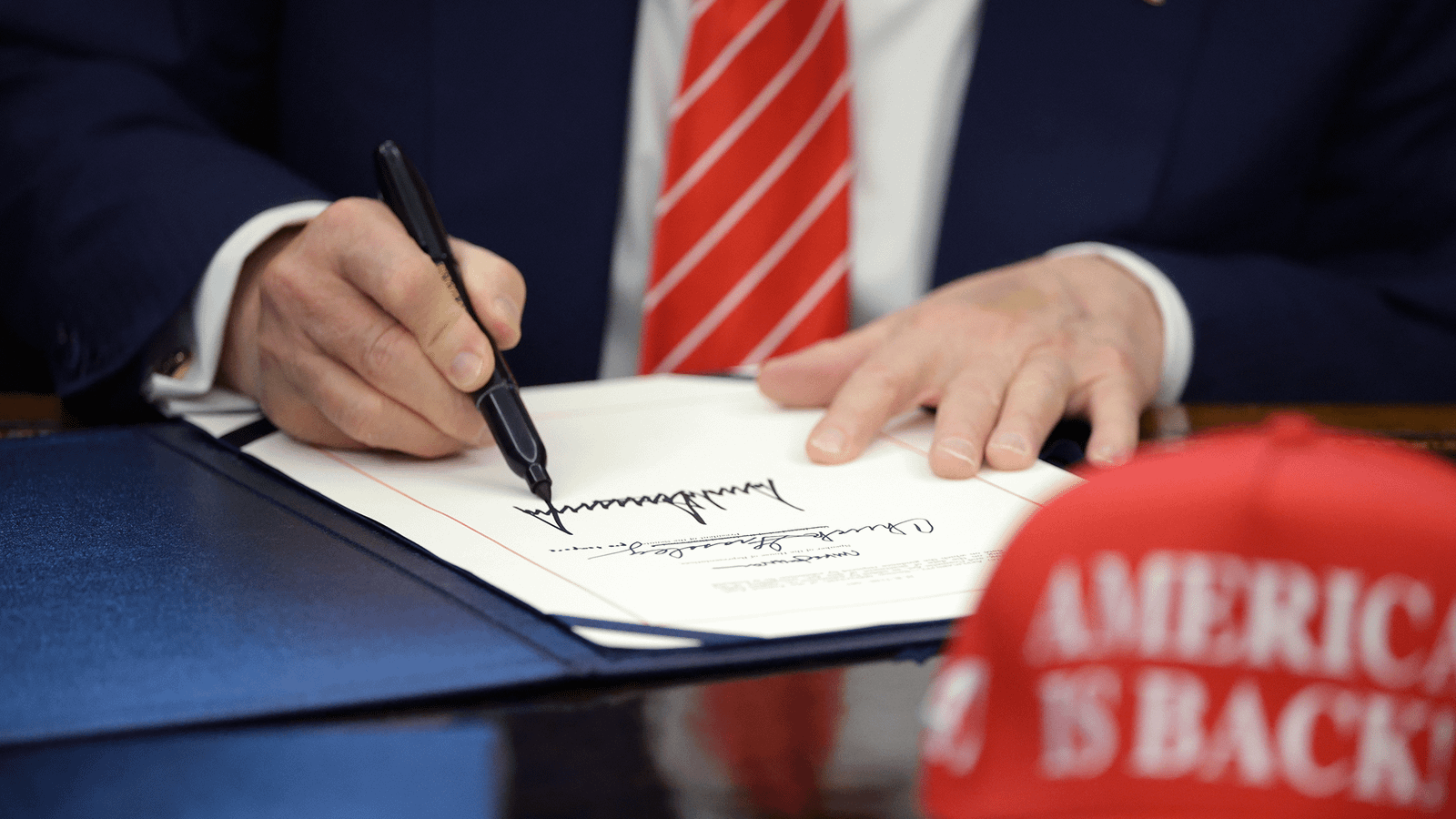
Silicon Valley’s top executives have seemingly taken every opportunity to cozy up to Trump. During his inauguration a year ago, Mark Zuckerberg, Jeff Bezos, Sundar Pichai, Elon Musk, and Cook sat smiling behind the president in the Capitol Rotunda. The obsequiousness has not stopped since: In August, Cook presented Trump with a custom plaque atop a 24-karat-gold base in the Oval Office. At a White House dinner the next month, the Google co-founder Sergey Brin praised Trump’s “civil rights” work, and OpenAI’s Sam Altman described Trump’s leadership as a “refreshing change.” Amazon, Apple, Meta, Microsoft, and Google are among the companies that have made donations to fund the new White House ballroom.
Tech has a long history of making moves to appease politicians in power, including ample campaign donations. But the industry’s leaders have not distanced themselves from Trump even as his administration has shattered constitutional and democratic norms. In Minneapolis over the weekend, an American citizen was shot in the street by masked federal officers after recording them with his phone. In the immediate aftermath, top Trump-administration officials blamed Pretti for his own death, despite contradictory video evidence. The uproar has been loud, and not just among Democrats. So far, Silicon Valley’s top CEOs have largely remained silent.
[Read: Billions of people in the palm of Trump’s hand]
In some ways, tech’s rightward shift in 2024 was overstated. The embrace of Trump was mostly concentrated among a small pack of investors and executives, who had a quieting effect on the rest of the industry. In the past few days, the gulf between the top brass and the rank and file has grown. Hundreds of employees from major companies including Apple, Amazon, OpenAI, and beyond have signed a statement asking the industry’s CEOs to call the White House and comment publicly against the violence. Several well-respected voices in the industry have spoken up: “Every person regardless of political affiliation should be denouncing this,” Google’s chief scientist, Jeff Dean, posted on X after the shooting. “The video was sickening to watch,” wrote the investor Vinod Khosla, who called out the administration’s “storytelling without facts or with invented fictitious facts.” Anthropic’s Dario Amodei, one of the few major Silicon Valley CEOs to have expressed his condemnation, took the opportunity to warn against the “reluctance of tech companies to criticize the US government.”
Altman reportedly rebuked the administration in an internal post to OpenAI employees, writing that “what’s happening with ICE is going too far.” He added that the president is “a very strong leader” who he hopes “will rise to this moment and unite the country.”
Yet there is little reason to believe that Silicon Valley’s uppermost ranks will more formally break with Trump. If anything, as the midterm elections approach, some executives appear to be doubling down on their support. This fall, Greg Brockman, the president of OpenAI, and his wife, Anna, donated $25 million to Trump’s super PAC. And Elon Musk recently signaled his political return with a $10 million donation to the pro-Trump candidate running to succeed Mitch McConnell—the Tesla CEO’s largest-ever single contribution to a Senate candidate. (Jassy, Cook, and Greg Brockman did not respond to requests for comment. OpenAI, which has a corporate partnership with The Atlantic, has previously said that the Brockmans’ donations were made in a personal capacity.)
[Read: The tech oligarchy arrives]
During Trump’s first term in office, a number of these tech leaders were outspoken in criticizing him: In 2017, Brin showed up to a protest against Trump’s Muslim ban, and Altman spoke with 100 Trump voters across the country to figure out what it would take to “convince them not to vote for him in the future.” Greg Brockman previously donated to Hillary Clinton’s 2016 presidential campaign. It’s conceivable that these leaders’ political views changed, of course, but the groveling reads obviously as strategy. Trump is a dealmaker, and playing to his administration is good for business. Already, tech companies have gained a lot by cozying up to Trump, including relaxed AI regulation and tariff exemptions.
This all risks being a short-term, transactional game. In the long run, tech executives’ alignment with the president could easily backfire. “The Trump supporters in Silicon Valley are making the same mistake as all powerful people who back authoritarians,” the venture capitalist Michael Moritz warned in 2024. “They are, I suspect, seduced by the notion that because of their means, they will be able to control Trump.” But Trump is mercurial: He will do as he pleases. As tech executives continue schmoozing with the president, there are no guarantees that they will get anything in return.